

Creating an Imagination Station is an easy way to encourage screen-free play for your kids! Here’s how to put one together today.

DIY Imagination Station – Screen-Free Fun for Kids
Laura, here! If you’re like me, you’ve probably been looking for screen-free ideas and activities for your kids and I’m sure here to tell you, you’ve come to the right place!
I love to watch my kids using their imaginations and creating games, stories, or little “inventions” to use in their play. So, I’ve leaned into their imaginative play and created the best “toy” money can buy – a box of trash! (Also known as our family Imagination Station).
In a large Rubbermaid tote, I’ve collected various items from around the house (starting with the recycling bin), and assembled the most random, and most FUN assortment of items to inspire my kids’ imaginations.
You could also call this an “Invention Box”, or come up with another cute name to refer to your box-o-trash by. (I like Imagination Station because it’s got total PBS Kids vibes!)
I’m going to explain how and why to create an Imagination Station for your home, and hopefully inspire your kids to explore, create, and stretch their imaginations – all while staying off screens. It’s a parenting WIN.

What is an Invention Box or Imagination Station?
An Invention Box (or Imagination Station) is a collection of recycled items, arts and craft supplies, building materials, and real-world objects that kids can freely use to build, design, and pretend.
There are no instructions, just loose parts and creative ideas. It encourages creativity, teamwork, problem-solving, and independent play.
Why create an “Imagination Station”?
Other than simply screen-free fun, here’s what creating this invention box achieves for your family:
Independent Play. While I love playing with my kids, the goal of this box is to give them an opportunity to play independently – i.e. without me. This box comes in handy when I’m working, doing stuff around the house, or just need some time to myself!
To make this happen, I only include items that require little to no input from adults, and they can use all by themselves. I even included a kid-safe glue gun that operates at a low temperature so my 7-year-old will be able to use it (she’ll brag about this responsibility to her sister, I’m sure, but such is life).

Controlled Chaos. For this Imagination Station to be a blessing to both kids and mom, there can’t be too much chaos that results. I’m intentional about what I throw in the box: nothing too messy, nothing that can be (quickly) turned into a weapon, and not so many things that the box will just get dumped and left.
Enthusiastic Use. I want my kids to want to explore the box and its contents. To accomplish this, there needs to be some freedom associated with it, and that can be tough (especially if you’re a little controlling like me). I thought about creating a “rules” sheet but decided against it. I really want them to enjoy this box together, and too much structure might deter them. Now, of course there are still ground rules like cleaning up after themselves, being kind, and not wrecking the contents of the box. But, I want them to feel free to use their imaginations to build, create, and invent.
Long-term play. An invention box is a rolling, long-term station that can be updated and changed out easily.
Have a good bottle or jar you just finished and almost threw out? Throw it in the invention box!
Come across some weird HVAC tubing in the garage you don’t need? Imagination Station!
Notice some of your materials are running low? Replenish as needed.
You can also encourage themed play by adding specific types of items to the box at one time. For example, maybe you want to gently suggest (without really suggesting and ruining the creating) a fun pirate island. You might make sure there’s a big box nearby (pirate ship), a spyglass (paper towel roll), a map of an unexplored island (a paper you sketched your backyard on), and some pirate outfits (maybe old clothes from mom and dad that you cut up a little).
A few minutes of gathering “random” items from your house can help create a whole day’s worth of creative play.

What to put in an Imagination Box for Kids
It sounds cliche, but the possibilities really are endless for an Invention Box to be fun and useful. However, I would recommend being a little intentional about what you include.
An important reminder for your Imagination Station is that it should not cost you a bunch of money! Truly, the purpose here is not to spend money on new toys, gadgets, or gear. The goal is to use what you have, add in a few purposeful items from the store, and let your kids’ imaginations run wild.
Note: If you’re not sure about what your kids will be interested in or they’re new to imaginative play, the best way to figure out what works in your box is just to observe. Start with what you think will work, and then quietly observe what they play with, how they play, and what they build. This will give you some clarity on what to switch out or add for next time.
Here are some ideas on different categories and suggestions to get you started:
Recycled and Repurposed Materials
Look around your house and your recycling bin for things that could be repurposed.
- Boxes and packing materials (I had a bunch of corrugated cardboard pieces from a dresser we bought recently – those were perfect)
- Empty paper towel, toilet paper, or wrapping paper rolls
- Jars and bottles (when something is empty and going to be recycled anyway, you can wash it out and throw it in the box! Right now we have an empty Dawn Powerwash bottle and a Treehut Sugar Scrub container in ours!)

Real-World Objects
Things that are ordinary in an adult’s day-to-day can be very exciting and encourage dramatic play for kids.
- Envelopes and stationary
- Office supplies (old items that don’t get used or a couple things from the Dollar Store)
- Dress-up accessories like costume jewelry, glasses (with the lenses popped out), etc. (note: I purposefully left out things like scarves and belts because I just know they’re going to get wrapped around somebody’s neck and I didn’t want the stress)
Various Textures & Materials
Look around for things that feel cool and spark sensory play.
- Canvas bags
- Scrap fabrics
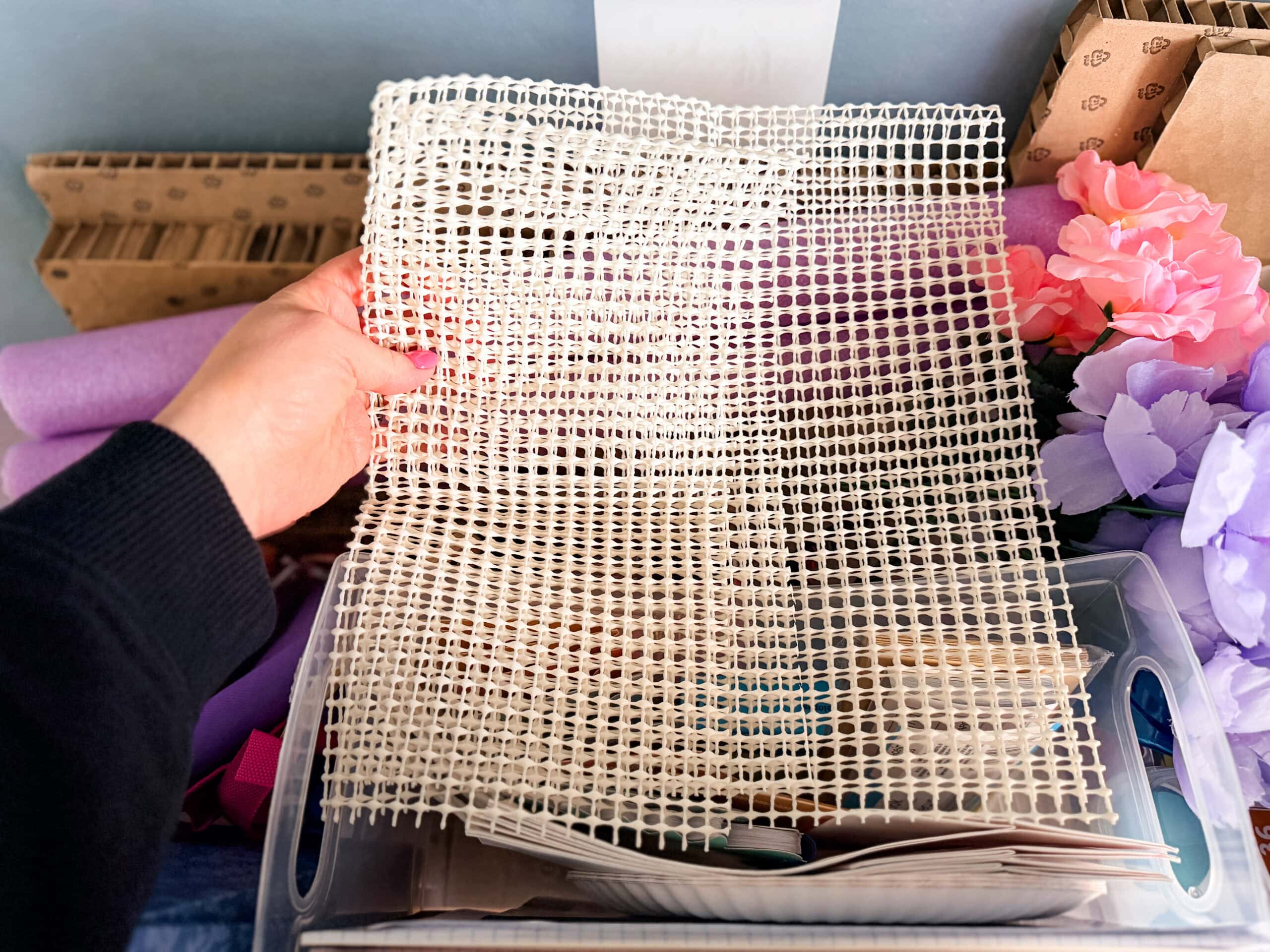
- Rugs, mats, etc (I threw in a non-slip rug pad – who knows what they’ll come up with!)
Arts & Crafts Supplies
I purposefully kept the art supplies to a minimum for our Invention Box. Not because my kids don’t love art. They really love it – and spend hours doing it! I wanted them to be able to enjoy inventing and imaginative play and not just spend three hours coloring. But, you can include more arts and crafts items in yours if you’d like!
- Construction paper
- Different patterned scissors
- Colorful tape
- Glue sticks and/or low temp glue gun
- Pipe cleaners
- Pom poms
- Glitter or glitter glue (at your discretion!)
- Stickers
- Markers, crayons, or pencils

Learning Resources (Optional)
I decided to add a few learning materials that I bought to our box. Mainly because they can be multi-purpose, and because I know my kids will likely end up playing school at some point. The Dollar Tree has a great classroom section where I found flash cards and a timer.
- Puzzles (I suggest open-ended wood shape puzzles versus a traditional picture puzzle)
- I love these fun stones that can be used for so many things
Inspiration
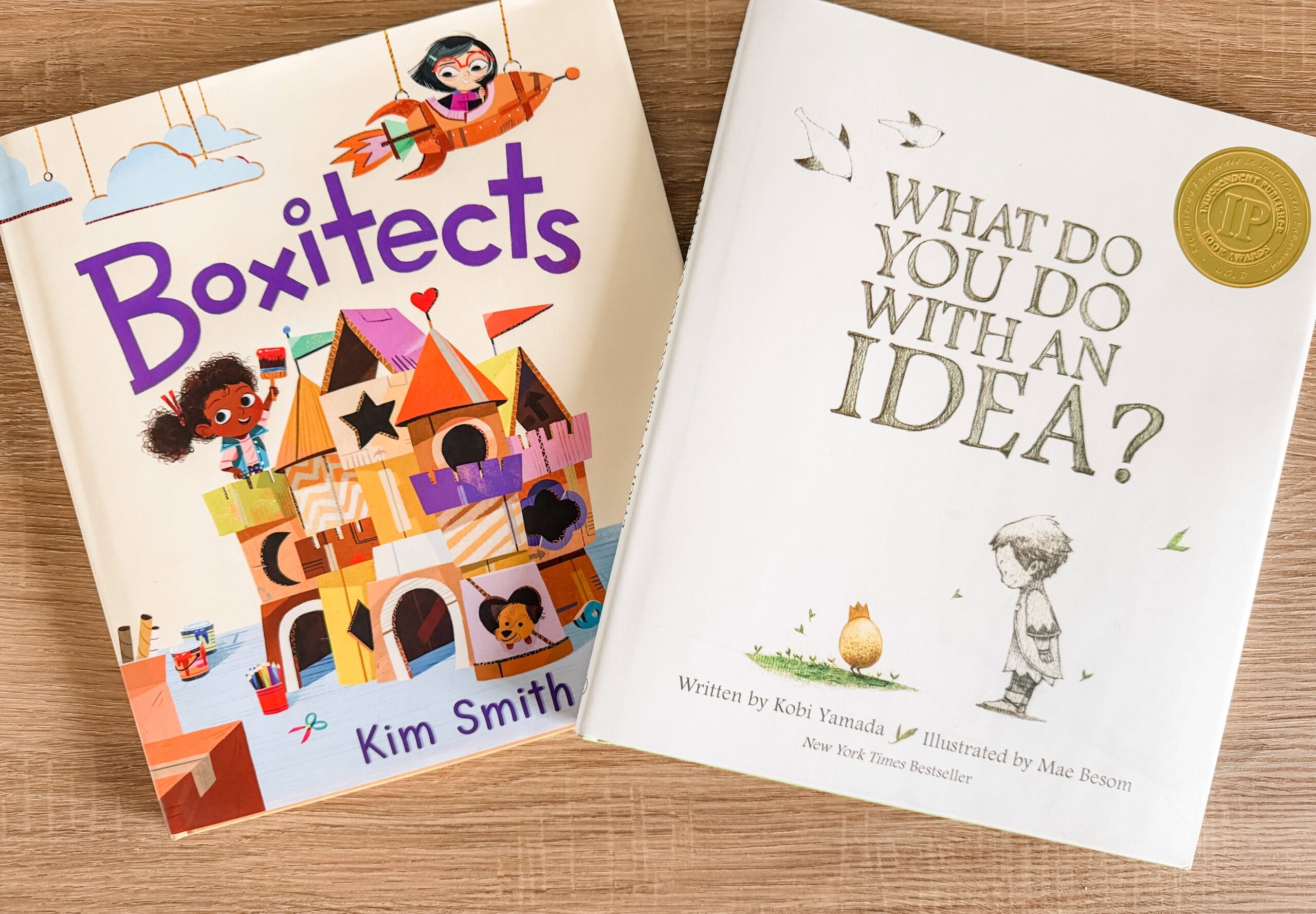
I put a couple fun books in the box to help my kids get inspired if they needed.
‘Boxitects’ and ‘What Can You Do With An Idea’ are two fun reads that help get those creative, inventive juices flowing!

I can’t wait for you to try creating your own Imagination Station for your family. It’s so fun to see the different ideas kids come up with and how they play (especially compared to how I thought they’d use something).
The best part of this is that it’s not one and done. Changing out the contents of your box makes for long-term fun that can last a whole childhood and beyond.
Happy creating, mamas!
Looking for more screen-free fun? Check out these other posts!



Leave a Reply